What Tolkien Knew of Game Design
10 August 2026
YouTube recently reeled me in with this irresistible thumbnail/title combo.
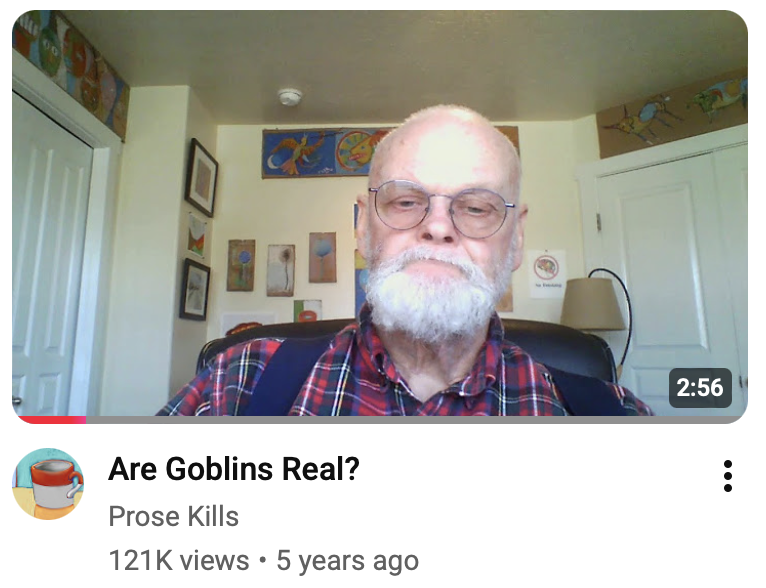
The video delivered. A monologue by poet John Briggs about the sanctity of a child’s imagination, and what it means to squash imagination for such trifling matters as reality.
Partway through the video, Briggs says:
A child’s imagination has its root in the fat world, where everything is possible. To deny the reality of things from the fat world is to choke off the child’s connection to it … this is what the skinny world does. It makes you choose either or, when the truth is really neither nor, but both.
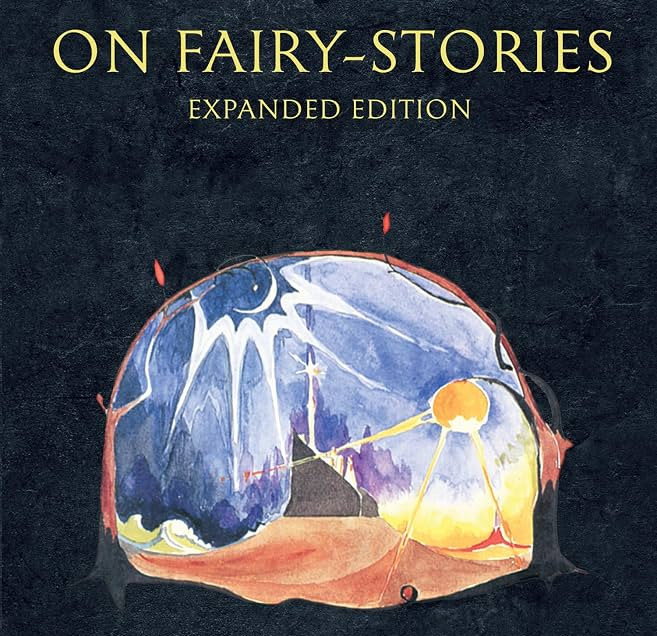
This felt like one of those self-evident truths. I wanted to read more. The closest piece of writing I could find was an essay by J.R.R. Tolkien titled On Fairy-Stories, in which Tolkien writes:
fairy-stories are not in normal English usage stories about fairies or elves, but stories about Fairy, that is Faerie, the realm or state in which fairies have their being. Faerie contains many things besides elves and fays … it holds the seas, the sun, the moon, the sky; and the earth, and all things that are in it: tree and bird, water and stone, wine and bread, and ourselves, mortal men, when we are enchanted.
He continues:
In that realm a man may, perhaps, count himself fortunate to have wandered, but its very richness and strangeness tie the tongue of a traveller who would report them. And while he is there it is dangerous for him to ask too many questions, lest the gates should be shut and the keys be lost.
Although Tolkien is primarily talking about literature, many of my favourite games seem to take place in faerie worlds. Worlds that defy description, that refuse to be compressed into familiar categories and symbols. In these worlds the sun doesn’t rise each day, but each day the sun does rise.
I would loosely define faerie in games as the awareness of unknown unknowns. To stand in the shadow of a system, unable to make out its shape.
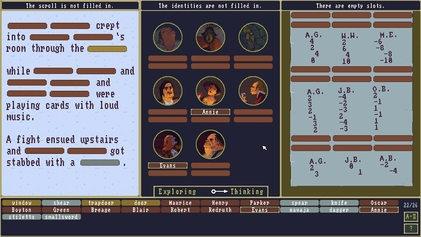
Many games have known unknowns. The Case of the Golden Idol presents a suite of dramatic vignettes, frozen in time. By exploring and collecting keywords, you’re able to piece together complete descriptions of each scene. The keywords are unknown to you in the beginning, but you’re always aware of the structure. You know that the keywords will populate a worksheet and that the worksheet requires a certain number of names, objects, etc., in specific locations. In this way the game is primarily interested in known unknowns, and does not feel faerie.
Some games that have unknown unknowns hide them entirely. When my Grandad taught me chess I thought I understood the full breadth of its rules. A few games in he took a pawn en passant. To me, the rule was an unknown unknown. An extension of the structure of the game. But because I wasn’t aware of it beforehand, it didn’t evoke faerie in the lead-up to its reveal. The reveal felt more like a scam than an enchantment.

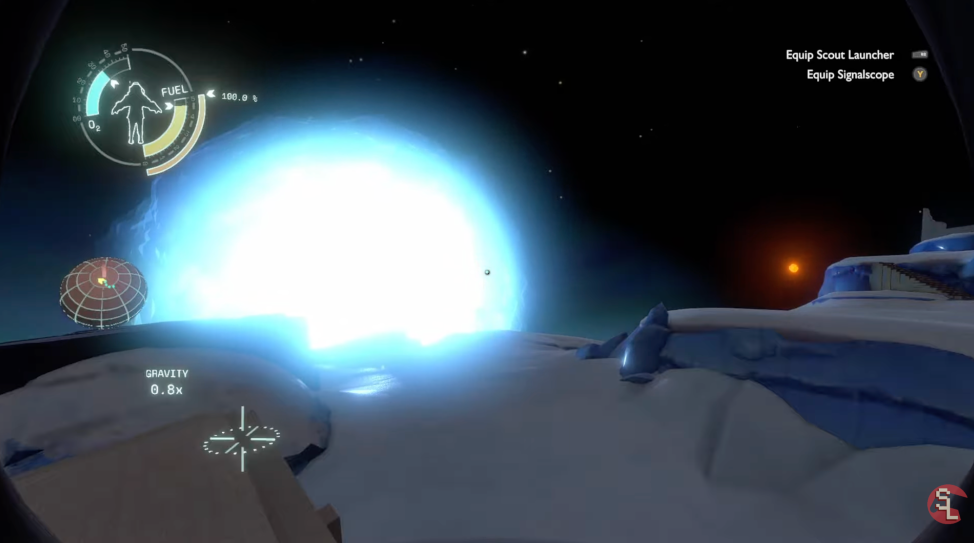
Outer Wilds, on the other hand, makes you aware of its unknown unknowns. The game offers you a mystery and a tidal wave of experiences to sort through. You know that you are surrounded by unknowns, but you can’t begin to guess how they might fit together into the larger structure of the game world (ignoring the ship log). They are unknown unknowns and you’re aware of them from the beginning. The majority of the game is faerie.
Often, I find it hard to describe these faerie games after I’ve finished them. The expansive web of possibilities gets collapsed into a single, rational truth. But it was never the truth that was enchanting. To understand these worlds is to close the gates and lose the key. Similarly, Tolkien notes:
Faërie cannot be caught in a net of words; for it is one of its qualities to be indescribable, though not imperceptible.
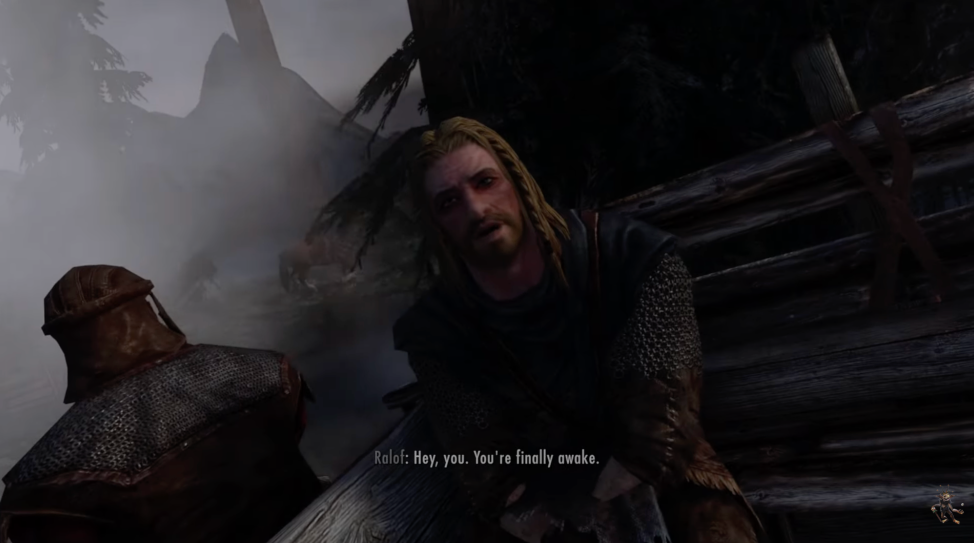
All games start with some measure of faerie, but we become immune to it over time. Oblivion was my first big RPG and I remember it as one of my most potent encounters with faerie. The perceived possibilities were so far beyond anything I’d experienced before that I could hardly comprehend them. Over the years I played a handful of other RPGs before playing Skyrim for the first time. Having become familiar with the conventions and patterns of RPGs as a genre, I instinctively drew a box around the possibilities of the game. Although I enjoyed it, its faerie had evaporated within minutes. Even in cases where I had drawn that box incorrectly, my inability to perceive the unknown unknowns made most of my time with the game feel mundane.
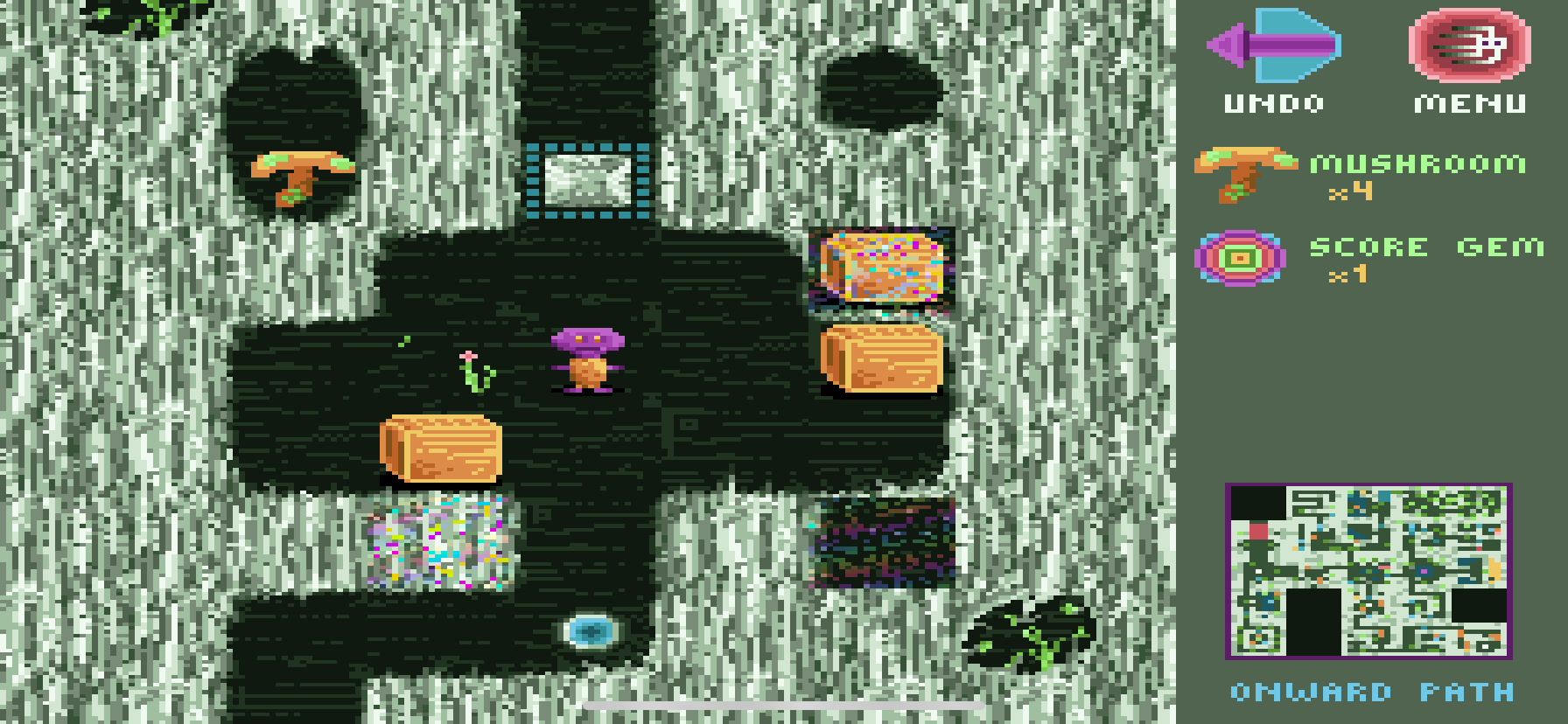
That’s not to say that faerie can’t exist within genre conventions. Genre can be used to conjure faerie too. In its first 30 minutes, Corrypt presents itself as a fairly standard Sokoban game. There are some neat variations, but having played Sokobans before I assumed that I understood the bounds of the systems. Then, I used magic for the first time. The bounds were shattered. The game unsettled me, unveiling new dimensions that lay beneath all of my experiences so far. The world was imbued with faerie.
Faerie can be wielded in many different ways, but it should be wielded with caution. Faerie worlds can be uncomfortable places. To enter a faerie world is to submit yourself to systems that you don’t understand and have little influence over. Tolkien wrestled with this discomfort:
Fantasy, of course, starts out with an advantage: arresting strangeness. But that advantage has been turned against it, and has contributed to its disrepute. Many people dislike being “arrested.” They dislike any meddling with the Primary World.
I’d like to experience more faerie worlds. More worlds that favour belief over understanding. More worlds that are neither nor, but both.
Having put a name to the sensation of faerie, several questions come to mind:
- Is it possible for a game to be set in a faerie world that is never rationalised down to a single truth?
- Is it possible for a game to exhibit faerie on replays?
- How does the specific nature of a game’s systems affect the texture of its faerie?
- Is there already a name for faerie that I’ve missed?
If you’ve seen these questions answered or feel compelled to answer them yourself, I’d love to hear about it. Thank you for reading.